%20(1).webp)
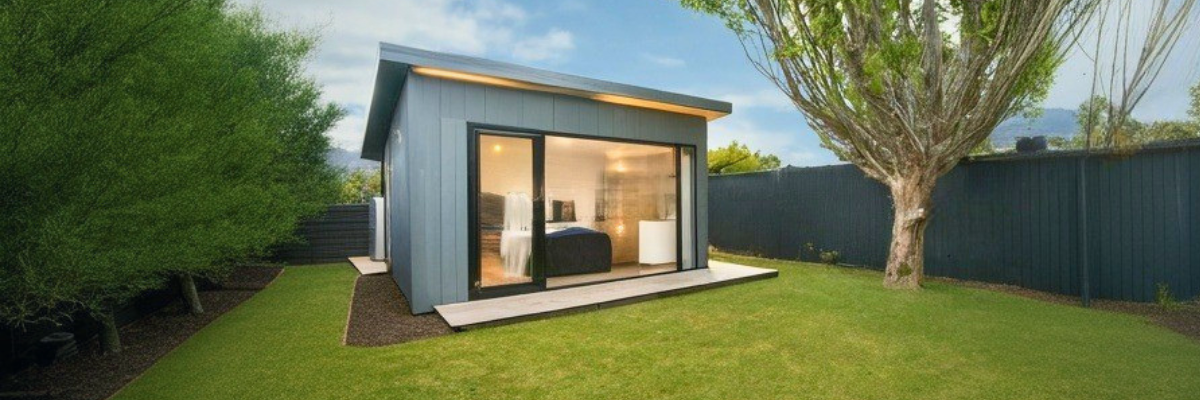
From 15 January 2026, new rules came into force that can make it easier to build a small detached dwelling, often referred to as a granny flat, without a building consent or resource consent in some cases. The changes sit across two separate regimes: the Building Act framework for non-consented small stand-alone dwellings, and the National Environmental Standards for Detached Minor Residential Units (NES-DMRU) under the resource management system. The key point for property owners is that these are not blanket exemptions. A granny flat may qualify under one regime but still need approval under the other, and other planning and legal constraints can still apply.
A detached minor residential unit can be a permitted activity for resource consent purposes in residential, rural, mixed-use and Māori-purpose zones, and the building consent exemption can apply to a qualifying small stand-alone dwelling. But the exemptions are conditional, and if the requirements are not met, the ordinary consenting process still applies.
The law now allows some homeowners to build one qualifying detached minor residential unit per site without needing a resource consent, provided the unit complies with the national standards and any applicable district and regional plan rules that still continue to apply. Separately, building work for a qualifying non-consented small stand-alone dwelling can proceed without a building consent, but only after a Project Information Memorandum (PIM) has been issued by the relevant council. No building work can begin before that PIM is issued.
That means “no consent required” does not mean “no council involvement”. In most cases, council still has a role through the PIM process, and owners still need to work carefully through site, design, infrastructure and compliance issues before building starts.
In broad terms, the new framework can allow one detached granny flat per site where the proposal meets the required standards. The detached minor residential unit must be no more than 70 square metres in floor area. In residential zones, site coverage must not exceed 50 percent. The unit must be at least 2 metres from the principal residential unit. Boundary setbacks are also prescribed: in residential zones, at least 2 metres from the front, side and rear boundaries; in rural zones, at least 10 metres from the front boundary and 5 metres from the side and rear boundaries.
For the building consent exemption, the dwelling must be wholly new, stand-alone, single-storey only, and no more than 70 square metres. It must use a lightweight timber or steel frame, lightweight roof materials, and wall cladding within the prescribed weight limits. It must also meet prescribed plumbing, drainage and water supply requirements, including connection to network utility systems where available, or compliant on-site systems where they are not.
A common misunderstanding is that the new rules override everything else. They do not.
Even where the granny flat qualifies for the resource consent pathway, it must still comply with district plan rules dealing with subdivision, matters of national importance, non-residential use, papakāinga where relevant, and earthworks. It must also comply with district plan rules that apply to the main dwelling and manage health and safety effects, including natural hazard risk, reverse sensitivity and site-specific infrastructure requirements such as drinking water, wastewater and stormwater. Regional plan rules still apply as well.
Likewise, the building consent exemption does not remove the obligation to comply with the Building Code. If the work does not satisfy the exemption conditions, carrying it out without a building consent can become unlawful. Councils also retain enforcement powers, including the ability to issue a Notice to Fix for non-compliant work.
Council involvement will still be needed at several points.
First, if you want to rely on the building consent exemption, you must apply for and obtain a PIM before work starts. The PIM application must include a description of the proposed building work and preliminary design plans, and councils must issue the PIM within 10 working days for a qualifying non-consented small stand-alone dwelling.
Secondly, council will still assess whether there are issues such as natural hazards, applicable district or regional plan controls, bylaws, or development contributions. If the site is affected by natural hazards and adequate mitigation has not been provided, the exemption may not be available unless the design is amended or a building consent is obtained. The guidance is explicit that the exemption can only be used once the natural hazard risks have been mitigated to the same extent that would have been required if a building consent were being issued under section 71(2) of the Building Act.
Thirdly, once the build is complete, the owner must send the required final plans and records to council within 20 working days, including Records of Work and other certificates. Development contributions, if charged, are also payable within 20 working days after completion.
A planning consultant can be particularly useful at the front end, before design is locked in.
That is especially so where there is any doubt about zoning, site coverage, setbacks, infrastructure constraints, earthworks, natural hazard overlays, reverse sensitivity issues, or regional plan controls. It is also sensible to get planning advice if the property is affected by flooding, erosion, heritage issues, multiple overlays, or unusual title or land use arrangements. Although the new national standards remove some traditional amenity controls for granny flats, they do not remove the need to assess the rules that still continue to apply.
In practice, early planning advice can help answer the most important question: are you actually entitled to use the exemption pathway, or are you better to proceed through a standard consent process from the outset?
Legal advice is often worthwhile before committing to the build, not just at the end.
A property lawyer can help review title issues, easements, covenants, cross-lease or unit title complications, access arrangements, infrastructure rights, and whether the proposed use of the granny flat could trigger any private land restrictions even if the public law pathway is available. Legal advice is also useful if the dwelling is intended to be rented, occupied by family under an informal arrangement, or linked to a future subdivision, financing or sale strategy.
This is important because the planning and building exemptions do not override private property rights or contractual arrangements affecting the land. Even if the council pathway is clear, the project can still run into legal difficulties if title restrictions or ownership issues are not addressed first. The completed granny flat records will also sit on the property file and appear on future LIM material, which can become relevant on refinance or sale.
The granny flat exemption is not an owner-builder shortcut.
Restricted building work on a non-consented small stand-alone dwelling must still be carried out or supervised by Licensed Building Practitioners, and the owner-builder exemption does not apply in this context. LBPs are required to provide Records of Work, and certificates of work are also required for the final design plans. Plumbing, drainlaying, gasfitting and electrical work continue to be subject to their own regulatory requirements and certification obligations.
That makes consultant and contractor selection critical. Because councils do not carry out inspections of granny flats built under the exemption, more of the practical compliance risk sits with the owner and the professionals engaged on the project.
Before treating a granny flat as a quick add-on, owners should work through a few practical questions.
Can the site physically accommodate the unit while meeting the applicable setbacks and coverage rules? Is there adequate stormwater, wastewater and water supply infrastructure? Is the site affected by flood risk or another natural hazard? Are there title restrictions or shared ownership issues? Will development contributions apply? Has the intended use been thought through from a legal, tax and property perspective?
Another practical point is timing. A PIM for a non-consented small stand-alone dwelling lapses if the building work is not completed within 2 years of issue, unless the territorial authority allows a further period.
The new granny flat rules are a useful step toward making small detached dwellings easier to deliver, but they do not create a free-for-all. Whether you can proceed without a building consent, a resource consent, both, or neither will depend on the site, the design, the zoning, the infrastructure, and whether the detailed statutory conditions are actually met.
For many property owners, the most sensible approach will be to get advice early from the right people: a planner to confirm whether the proposal fits within the planning framework, a designer and LBP team to ensure the technical requirements are met, and a lawyer to identify title, ownership, occupation and property-risk issues before money is committed.
McVeagh Fleming can assist with the legal issues that sit around a proposed granny flat development, including reviewing title and land ownership issues, advising on easements, covenants and occupation arrangements, identifying property risks that may affect future sale or refinancing, and working alongside planners and other consultants where council engagement is required.
From 15 January 2026, new rules came into force that can make it easier to build a small detached dwelling, often referred to as a granny flat, without a building consent or resource consent in some cases. The changes sit across two separate regimes: the Building Act framework for non-consented small stand-alone dwellings, and the National Environmental Standards for Detached Minor Residential Units (NES-DMRU) under the resource management system. The key point for property owners is that these are not blanket exemptions. A granny flat may qualify under one regime but still need approval under the other, and other planning and legal constraints can still apply.
A detached minor residential unit can be a permitted activity for resource consent purposes in residential, rural, mixed-use and Māori-purpose zones, and the building consent exemption can apply to a qualifying small stand-alone dwelling. But the exemptions are conditional, and if the requirements are not met, the ordinary consenting process still applies.
The law now allows some homeowners to build one qualifying detached minor residential unit per site without needing a resource consent, provided the unit complies with the national standards and any applicable district and regional plan rules that still continue to apply. Separately, building work for a qualifying non-consented small stand-alone dwelling can proceed without a building consent, but only after a Project Information Memorandum (PIM) has been issued by the relevant council. No building work can begin before that PIM is issued.
That means “no consent required” does not mean “no council involvement”. In most cases, council still has a role through the PIM process, and owners still need to work carefully through site, design, infrastructure and compliance issues before building starts.
In broad terms, the new framework can allow one detached granny flat per site where the proposal meets the required standards. The detached minor residential unit must be no more than 70 square metres in floor area. In residential zones, site coverage must not exceed 50 percent. The unit must be at least 2 metres from the principal residential unit. Boundary setbacks are also prescribed: in residential zones, at least 2 metres from the front, side and rear boundaries; in rural zones, at least 10 metres from the front boundary and 5 metres from the side and rear boundaries.
For the building consent exemption, the dwelling must be wholly new, stand-alone, single-storey only, and no more than 70 square metres. It must use a lightweight timber or steel frame, lightweight roof materials, and wall cladding within the prescribed weight limits. It must also meet prescribed plumbing, drainage and water supply requirements, including connection to network utility systems where available, or compliant on-site systems where they are not.
A common misunderstanding is that the new rules override everything else. They do not.
Even where the granny flat qualifies for the resource consent pathway, it must still comply with district plan rules dealing with subdivision, matters of national importance, non-residential use, papakāinga where relevant, and earthworks. It must also comply with district plan rules that apply to the main dwelling and manage health and safety effects, including natural hazard risk, reverse sensitivity and site-specific infrastructure requirements such as drinking water, wastewater and stormwater. Regional plan rules still apply as well.
Likewise, the building consent exemption does not remove the obligation to comply with the Building Code. If the work does not satisfy the exemption conditions, carrying it out without a building consent can become unlawful. Councils also retain enforcement powers, including the ability to issue a Notice to Fix for non-compliant work.
Council involvement will still be needed at several points.
First, if you want to rely on the building consent exemption, you must apply for and obtain a PIM before work starts. The PIM application must include a description of the proposed building work and preliminary design plans, and councils must issue the PIM within 10 working days for a qualifying non-consented small stand-alone dwelling.
Secondly, council will still assess whether there are issues such as natural hazards, applicable district or regional plan controls, bylaws, or development contributions. If the site is affected by natural hazards and adequate mitigation has not been provided, the exemption may not be available unless the design is amended or a building consent is obtained. The guidance is explicit that the exemption can only be used once the natural hazard risks have been mitigated to the same extent that would have been required if a building consent were being issued under section 71(2) of the Building Act.
Thirdly, once the build is complete, the owner must send the required final plans and records to council within 20 working days, including Records of Work and other certificates. Development contributions, if charged, are also payable within 20 working days after completion.
A planning consultant can be particularly useful at the front end, before design is locked in.
That is especially so where there is any doubt about zoning, site coverage, setbacks, infrastructure constraints, earthworks, natural hazard overlays, reverse sensitivity issues, or regional plan controls. It is also sensible to get planning advice if the property is affected by flooding, erosion, heritage issues, multiple overlays, or unusual title or land use arrangements. Although the new national standards remove some traditional amenity controls for granny flats, they do not remove the need to assess the rules that still continue to apply.
In practice, early planning advice can help answer the most important question: are you actually entitled to use the exemption pathway, or are you better to proceed through a standard consent process from the outset?
Legal advice is often worthwhile before committing to the build, not just at the end.
A property lawyer can help review title issues, easements, covenants, cross-lease or unit title complications, access arrangements, infrastructure rights, and whether the proposed use of the granny flat could trigger any private land restrictions even if the public law pathway is available. Legal advice is also useful if the dwelling is intended to be rented, occupied by family under an informal arrangement, or linked to a future subdivision, financing or sale strategy.
This is important because the planning and building exemptions do not override private property rights or contractual arrangements affecting the land. Even if the council pathway is clear, the project can still run into legal difficulties if title restrictions or ownership issues are not addressed first. The completed granny flat records will also sit on the property file and appear on future LIM material, which can become relevant on refinance or sale.
The granny flat exemption is not an owner-builder shortcut.
Restricted building work on a non-consented small stand-alone dwelling must still be carried out or supervised by Licensed Building Practitioners, and the owner-builder exemption does not apply in this context. LBPs are required to provide Records of Work, and certificates of work are also required for the final design plans. Plumbing, drainlaying, gasfitting and electrical work continue to be subject to their own regulatory requirements and certification obligations.
That makes consultant and contractor selection critical. Because councils do not carry out inspections of granny flats built under the exemption, more of the practical compliance risk sits with the owner and the professionals engaged on the project.
Before treating a granny flat as a quick add-on, owners should work through a few practical questions.
Can the site physically accommodate the unit while meeting the applicable setbacks and coverage rules? Is there adequate stormwater, wastewater and water supply infrastructure? Is the site affected by flood risk or another natural hazard? Are there title restrictions or shared ownership issues? Will development contributions apply? Has the intended use been thought through from a legal, tax and property perspective?
Another practical point is timing. A PIM for a non-consented small stand-alone dwelling lapses if the building work is not completed within 2 years of issue, unless the territorial authority allows a further period.
The new granny flat rules are a useful step toward making small detached dwellings easier to deliver, but they do not create a free-for-all. Whether you can proceed without a building consent, a resource consent, both, or neither will depend on the site, the design, the zoning, the infrastructure, and whether the detailed statutory conditions are actually met.
For many property owners, the most sensible approach will be to get advice early from the right people: a planner to confirm whether the proposal fits within the planning framework, a designer and LBP team to ensure the technical requirements are met, and a lawyer to identify title, ownership, occupation and property-risk issues before money is committed.
McVeagh Fleming can assist with the legal issues that sit around a proposed granny flat development, including reviewing title and land ownership issues, advising on easements, covenants and occupation arrangements, identifying property risks that may affect future sale or refinancing, and working alongside planners and other consultants where council engagement is required.


.png)

